Short Explanation
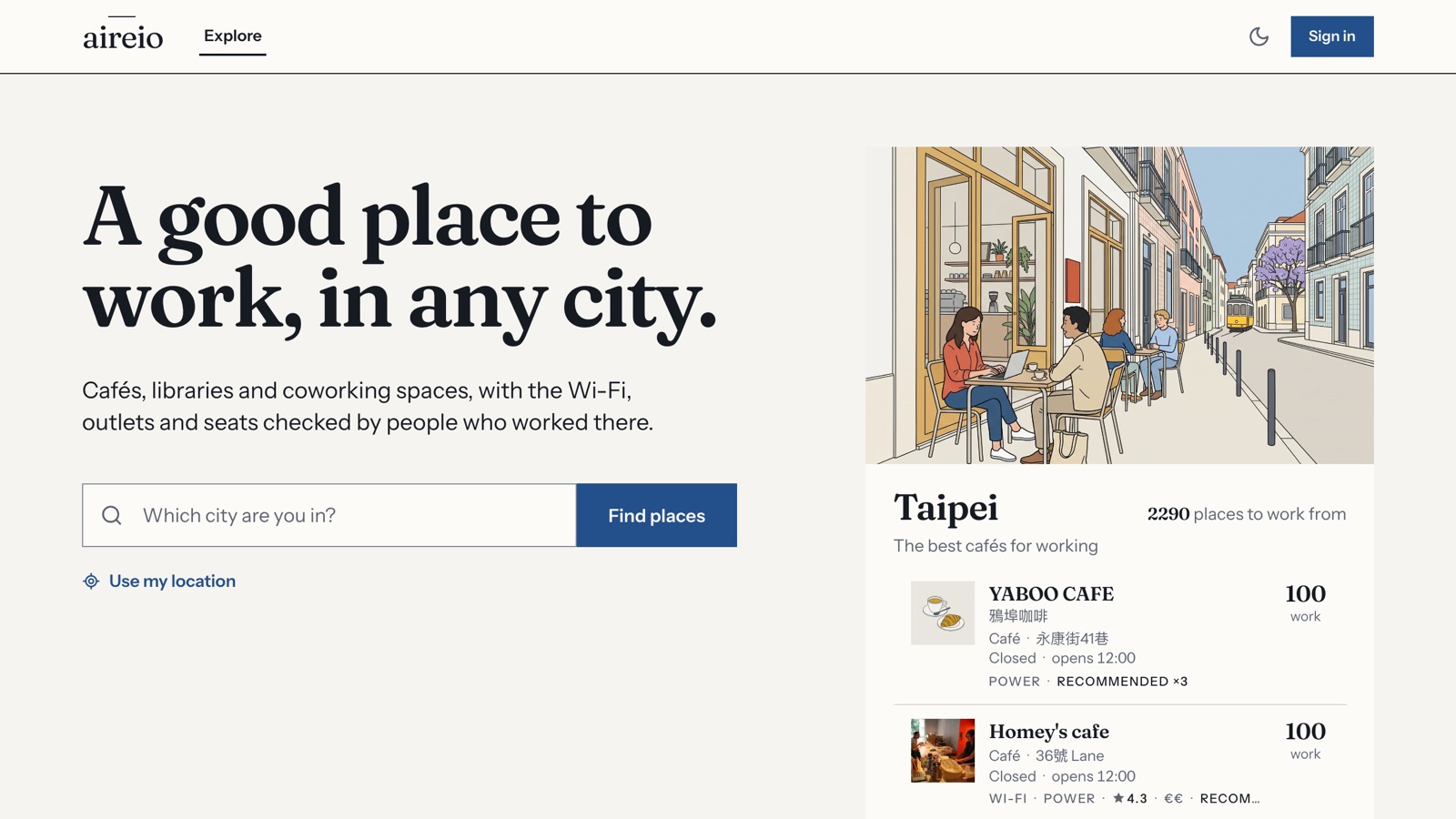
Aireio helps remote workers find a good place to work in any city. It lists cafés, libraries and coworking spaces, and gives each one a work score built from Wi-Fi, power outlets, seating and what people say about working there.
How it works
- Places: each city is seeded from OpenStreetMap and Google Places, then deduplicated. Wikidata and Wikimedia Commons add photos and descriptions, with credit and licence shown.
- Facts with a source: every fact about a place, such as "has outlets" or "good Wi-Fi", is stored with where it came from and how sure it is. Review text is read by a keyword parser that quotes the sentence it used, with no AI model and no API cost.
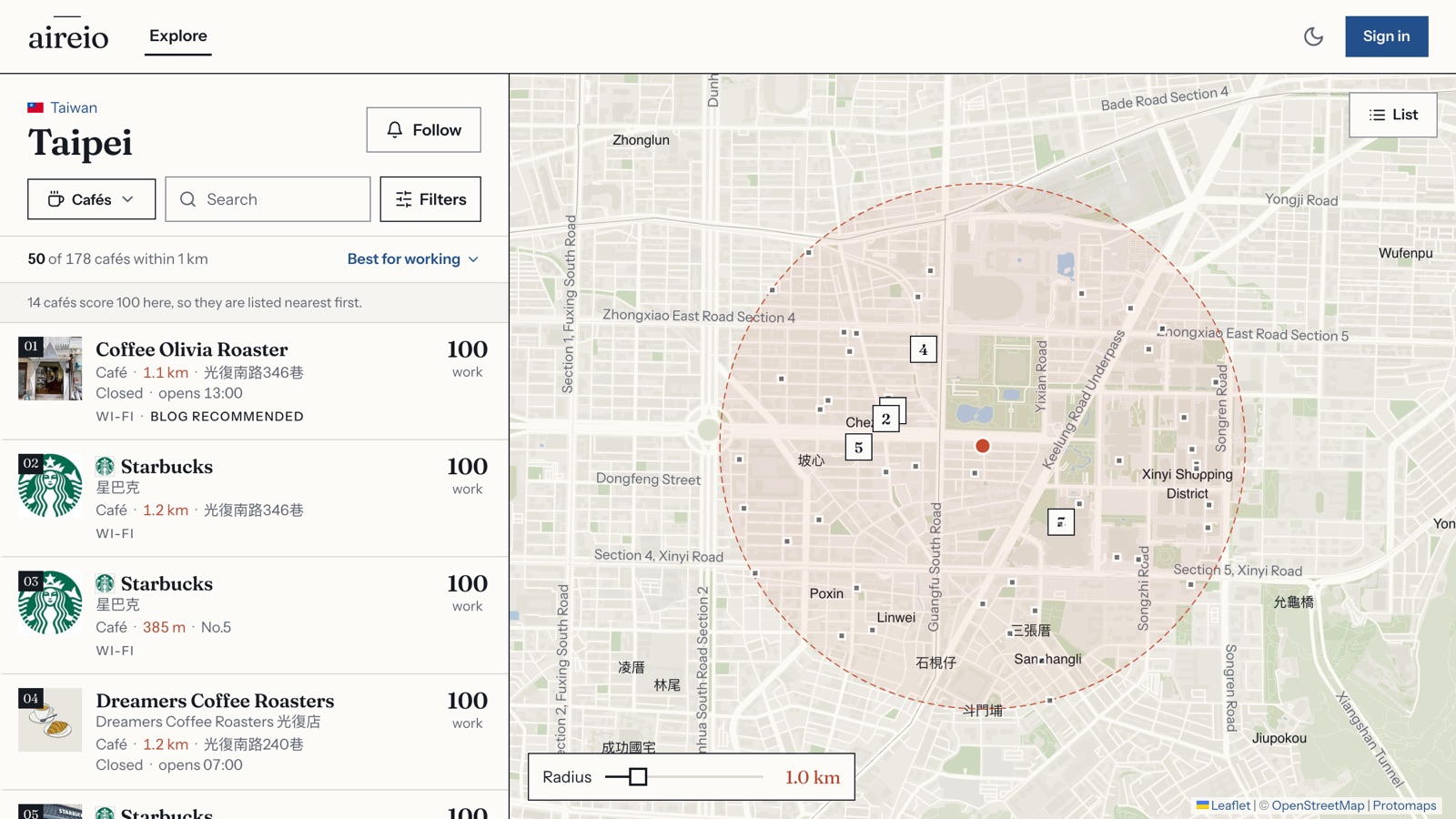
- Work score: those facts roll up into one score, so a city page can sort by "Best for working".
- Community: signed-in people can review places, upload photos, check in, host work sessions, follow a city and share lists. Photos are screened before they go up, and anything can be reported or its author blocked.
- Maps: Leaflet on self-hosted map tiles cut from the Protomaps build, so there is no map vendor and no key.
- Apps: iPhone and Android apps, built with Capacitor on the same code as the site, including a share extension that adds a place from Apple Maps or Google Maps.
Tech Stack Used
Built with Next.js, React, TypeScript, Tailwind CSS
- Next.js and React: the site and the API, rendered on the server so city and place pages can rank in search.
- Postgres: self-hosted, with plain SQL migrations.
- Auth.js: email and social sign-in.
- Leaflet and PMTiles: the maps, with no third-party tile service.
- Capacitor: the iPhone and Android apps.
- Docker on Coolify: deployed to my own server.
Project Goals
I travel for work and kept needing a quiet place with Wi-Fi and an outlet in a city I did not know. Aireio is the tool I wanted: open a city, see the best places to work nearby, and trust the details because they came from people who worked there.